ED680 Final Reflections

IMG_9854

How does understanding culture and power impact your teaching?

The more experience we gain as educators, the more we will see that cultural differences do exist in the classroom, that power dynamics accompany these differences, and that these differences as well as similarities amongst our students impact each of their educational experiences.

What three words stood out to me on the classroom created word wall?

  1. Awareness.  Continually striving to become aware of what’s around us while recognizing that we are never fully aware of everything around us.  We all come to the classroom with our own biases, lenses we view the world through, various forms of privilege and differing ideas.  Thus, it’s a constant job- working on being aware.  Through this class we focused on the need and sometimes difficult task of putting yourself in someone else’s shoes.  What is the background that someone is bringing with them into the classroom? What cultural norms does one hold? What are the power dynamics at play within a classroom? Who’s voice (or presence) is not being heard? Who is not being seen? Are we aware of our own biases, privileges and world views?  As David Katzeek so eloquently stated- how do we use this awareness to lift each student up and help them see their place in the world? This class was a wonderful reminder of how important in life, as well as in the classroom, it is to try to bring a deep awareness into each day, situation, lesson, assignment and activity.
  2. Place-Based Education.  I feel it is an effective educational tool to use the community you are in as the base for learning to grow and expand from.  One of the biggest learning’s of this class for me was how important and relevant place-based education is.  If a student in Anchorage, Alaska studies World War II, for example, but never learns about how WWII impacted Alaska, an opportunity to deepen one’s educational experience has been lost.  If a math teacher only uses word problems standard for students across the United States, and doesn’t incorporate the local community and surroundings into these word problems, a deeper learning has been lost.  It is important to connect one’s own backyard in history with the world at large.  And how amazing was our ED680 math lesson that incorporated totem poles, humpback whales and Tlingit art? Think global and act local.
  3. Critical Thinking.  Having the ability to view what is being taught with a critical eye and question its’ relevance to one’s own culture and life is important.  I hope to help my student’s recognize the need to critically think about what we are learning in the classroom.

My plan for this upcoming year:

I look forward to my learning and growth as an educator in the upcoming year.  The phrase that comes to my mind is ‘the more you learn, the less you know.’  As a student teacher, I should have ample time to observe, listen and get to know my students.  With this, I hope to learn more about their backgrounds and what influences (including culture) have shaped where they are today.  This will help me become more aware of what they are bringing to the classroom and to better facilitate their educational experiences.  I also look forward to using my community as a classroom- starting from our school, moving out to the community and then connecting what we see to the larger picture of ‘how this relates to our homes as well as the world.’ Lastly, I hope to introduce topics from different lenses, to allow students to look at subjects with a critical lens and begin seeing the importance of looking at multiple perspectives on a subject instead of taking something they read or hear at face value.

ALST 600 Final Reflection


IMG_9840

Project-Based Learning: What did the teacher in me learn?

What a wild and quick three weeks it has been. Probably the biggest learning I had from this class was the gentle reminder that I don’t have to be an expert in the material I am teaching to effectively facilitate student learning. I will not ever be an expert in everything- and that is O.K.  The beauty about project-based learning that Peter so vividly showed us is it is about empowering students to do the learning on their own. They are the one’s that are doing the research, exploring what interests them, using their creativity and compiling their results into a final product. It allows the teacher to look at the bigger picture and facilitate the environment in which students are learning, but allows the students themselves to own what knowledge they will take away from the project.  It is important to remember that I don’t have to be an expert on everything that is introduced into a classroom.  It is also important to remember that learning should go much deeper than that what the teacher thinks is important to learn.  Project-based learning allows for this.

In this class, we were broken into groups of five or six people.  Therefore, the project required us to work together in groups- another very important life skill.  We had to not only deal with different communication and learning styles, but we had to together produce and complete a product that we were all in agreement on.  For our particular group this was not difficult.  For some groups, there were some intergroup dynamics that had to be addressed.  Working with others is not always easy.  Introducing this fact to students, and also introducing them to ways in which they can more effectively work in a group, could be a very powerful tool for the future.  Showing students that the norms that a classroom might create, as well as the purpose, goals and objectives of a particular lesson or unit, are also helpful to utilize and set within a group during a group project.

This was a condensed course and project, therefore, one thing it was lacking was adequate time. If the goal of the project is to have students learn about each others work, then in the future I will need to give the time to have them do this. In this course, we sort of ran out of the time to truly learn about ‘Alaska’, rather, I learned a bit about my section of Alaska that I researched- as well as the section that I edited for a different group.  I learned much, but a ‘teacher learning’ to take home is that amount of time a project like this may require.

Overall, I really enjoyed the project.  I learned many interesting new online sources, technologies and ways of going about research.   We were shown many tools to make the classroom more interactive, fun and technologically creative.  Thank you, Peter, for doing such a wonderful job.  I really enjoyed everything that you brought to Juneau with you.


Reflections on 680 Multicultural Ed

Words have a powerful effect on students. As a teacher, it is crucial to be aware of word choice. Words can cause great harm. There is no pulling a culturally insensitive word back from the universe once it has been uttered. A student could be forever damaged if he or she feels unwanted or stupid in the eyes of a teacher. If a student’s culture is overlooked throughout his or her schooling, a student will start to believe their culture has no place in the world. This could lead to despair, worthlessness and even suicide. David Katzeek spoke about the power of words when meet with us on the first day of class. He said, “every child is special,” and “you are an intelligent human being,” and “[child] has the power within them”.  He translated these from Tlingit and had first heard them from his grandparents. There were so many precious gems to remember and apply to the classroom that had been put to use for thousands of years by the Tlingit People. The power of words can “lift up” a student to accomplish things they never thought possible.

As teachers, we must work hard to balance the perspectives the students receive, so a student’s culture is not overshadowed by the dominant culture’s world view. We must be honest with students about the hard realities that exist in our society. The more points-of-view we can see the world through, the deeper our understanding of the world can be. This is how we can empower all students to become great thinkers and doers of great deeds. Over the last three weeks, I have felt empowered. It has been the best feeling. If my students can feel the joy of learning that I am feeling, I will know we are on the right path.


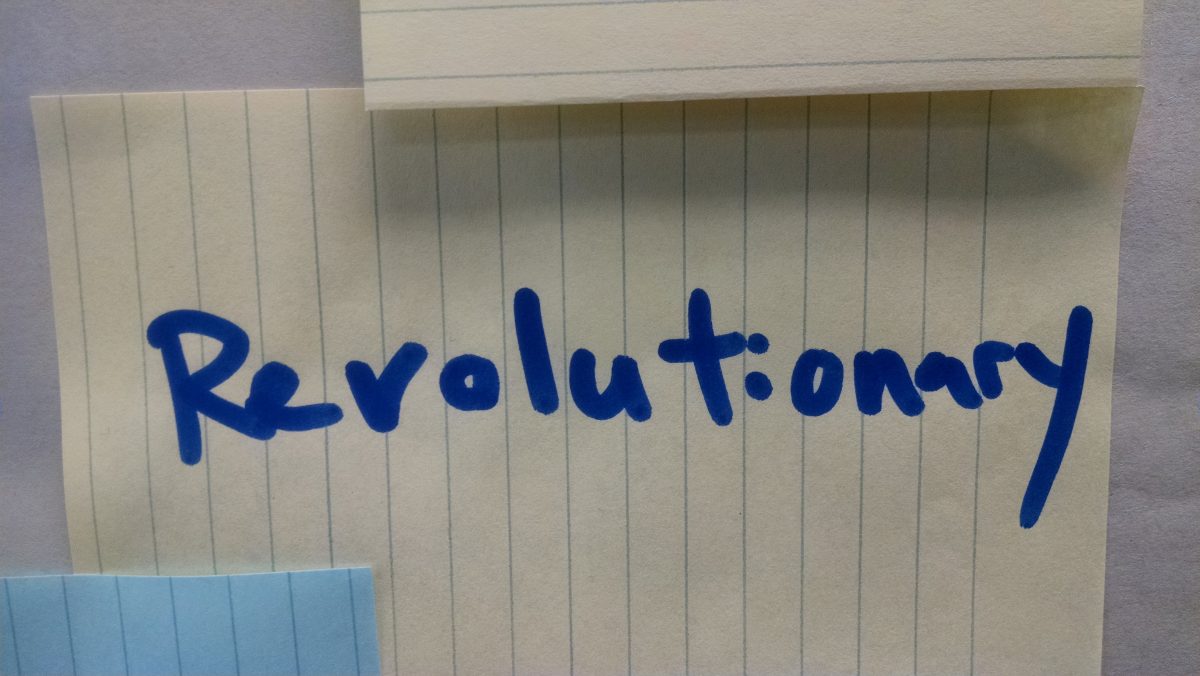
IMG_20160701_150520152  I choose whiteness, uncomfortable, and revolutionary from the word wall because together they tell a story of how we can begin to make changes in a flawed system. In order for there to be a revolutionary change in education, it is vital to understand that there exists a disparity between cultures. There is a whiteness that is most often not seen or recognized by white culture. The whiteness blinders must be removed in order to see the disadvantages that a multitude of culturIMG_20160701_150523802es face in our country. We must see that by design this system is made for an elitist white world aimed at controlling the masses through the fear of each other.

In order to change the system at root in education, we must embrace the uncomfortable topics such as racism. We must recognize that racism is still very much a part of our students lives. We must know that the very idea of race is a social construct. Discussing these issues and recognizing that they exist is the first step in deconstructing a destructive system. We cannot skirt around these often painful topics. We cannot fear stirring up emotions and tiptoeing around the fragile mindset of the privileged. This is the revolution that must happen for the world to be a better place. It will be uncomfortable and it should be. As Mahatma Gandi once said, “you must be the change you want to see in the world.”

IMG_20160701_150537936


My goal is to teach in a respectful, balanced manner. The classroom will be held to the same values. We will look to Traditional Values as a model for the classroom to follow. As a language arts/English teacher, we can apply Traditional Values to all the literature we read. By doing this, we can bring the mindset of a variety of people to any region and time period of the world

Talking Circle Guidelines PosterIt is my understanding that my student practicum at Dzantik’i Heeni Middle School will be focusing their curriculum on world literature this coming year. By going far and wide, I want to keep subjects grounded and relevant on a local level.  We can do this by reading/hearing stories based in Alaska time and space while running parallel to the world literature. It could be very powerful to recognize that while Homer wrote the Iliad and Odyssey, the Tlingit people and other indigenous people of Alaska were passing down Raven stories as well their pantheon of knowledge orally.

I plan to incorporate as much of the Tlingit language as possible into the classroom on a daily level.  I realized that a Tlingit place name map could be a central resource to study the language.  With the help of cultural bearers and Elders, we can learn how to make the sounds in order say the words properly.  I want to challenge the way we make sounds and break the lazy habits that afflict most English speakers. Language holds the essence of a culture in my eyes. Even by making small attempts at speaking another language, a student can begin to understand another culture and have a broader world view.


Project-Based Learning

(Clip art: Girl Hanging Upside Down)

You just experienced project-based learning.
What did the teacher in you learn?

I learned many transformative things through project-based learning:

  1. I learned about the power of a flipped classroom. We spent our time in class wisely, learning important teaching strategies that finally put a lot of things together in my head. I learned so much about making teaching about the students not the teacher.
  2. I learned about the power of uncovering information for myself. Researching through books, videos, the internet and talking to people made me grasp the information on a much deeper level.
  3. I learned about the importance of a real audience. The iBook is to be published, and for that reason I cared so much about the sources, the perspectives, the words and the tone because all I thought about throughout the process was the people who may read the book.
  4. My last and probably most transformative lesson about project-based learning was about the power of social learning. I was completely blown away by amount that each of us learned through editing and revising our work together.

Final Reflections: Ed 680

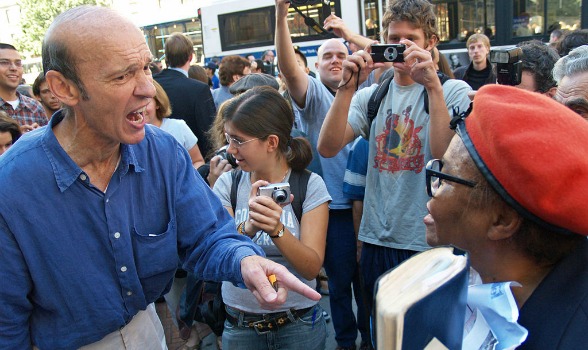
(Anger during protest. Source: WikiMedia Commons)

How does understanding culture and power impact your teaching?

A understanding of culture and power greatly impacts my teaching. The biggest way it impacts my teaching is by ensuring that I critically look at myself and the way that I communicate with children, parents and the community. It is also about knowing to listen and honor each of my students experiences. An understanding of culture and power means recognizing that everybody has a unique culture that extends beyond ethnicity; while being aware of the existing white dominance and privilege. For that reason, it is all the more important that I get to know and understand each of my students; and that I believe in each student’s endless potential.

Pick three terms that resonate with you from the Multicultural Education word wall. Define the terms and discuss why you chose these three terms.

I chose these three terms because these are the terms that I regrettably know the least about, and one of the most important things that I have learned about being a teacher, is to always look for ways to expand my knowledge.

Fragmentation: At the most basic level, it seems that fragmentation is the breaking down of the traditional senses of a culture. In the education system, fragmentation could be caused by a lack of a connection between a certain group of students and the school system. This lack of connection, or gap may cause poor interrelationships amongst the school and parents. At its core fragmentation is about structural equality, in that systems provide  something for one group of people that they do not provide for another.

White Fragility: White fragility is about a state in which white people may reach when faced with even a small amount of racial stress. White fragility may include acting defensive, angry, full of guilt or other actions including, leaving the conversation in a high stress situation or causing an argument.

Meritocracy: Boy am I ever glad that I looked into this word. Because it is something that I feel very passionate against. Meritocracy means that in society those  with natural (or predisposed) ability are rewarded.

Describe your plan to teach in a culturally responsive way in the coming year. Include teaching strategies you might employ as well as content/units you will implement.

It is necessary that  acknowledge and understand my own cultural values, so that I may understand how it impacts my teaching practices. It is so important that I recognize my cultural identity and then reflect on how I can go about reaching and valuing each and every child. A teaching strategy that is so important to me is bringing my students’ stories and words into my personal preparation, lesson planning and curriculum. This is only possibly by building lasting relationships with all my students and creating environments where students feel safe enough to indulge in taking risks and making mistakes in order to build richer and deeper understandings.

Standards for Culturally Responsive Curriculum

During our class discussion on the Alaska Standards for Culturally Responsive Curriculum, my group looked at Cultural Standard C, which states that “a culturally responsive curriculum uses the local language and cultural knowledge as a foundation for the rest of the curriculum.”  Some important aspects of this cultural standard are as follows: 1) utilizing local language as a basis for deeper learning, 2) utilizing the study of place, 3) incorporating language and cultural immersion, 4) including all community members as potential teachers, 5) utilizing local cultural knowledge as a way to teach conventional curriculum content, 6) utilizing modern technology to preserve and document traditional cultural knowledge, and 7) treating traditional cultural protocol with sensitivity.


A music lesson I would design based on Cultural Standard C is something I would describe as a “Community Musical Exploration”.  For this lesson, I would provide my students with field recorders and then send them out into the community to explore and document the local musical traditions.  Each student would complete a self-guided project exploring and making connections with the great variety of musical traditions and performers in their community.  For this project, I would have students ask a community member, Elder, Culture Bearer, or relative of their choice to teach them a local traditional song from any background (i.e. a Tlingit song, an old time fiddle song, a blues song, etc.).  I would encourage the students to ask their new teacher for permission to record the lesson and song in order to document the learning and performing process.  If permission is not granted or the community member does not feel comfortable being recorded, I would have that student write about the lesson and the song they learned instead of making audio documentation.  After learning a new song from their community teachers, I would have each student write a reflection about their experiences and what they learned.  After going out into the community and learning from community members, Elders, Culture Bearers, and relatives, I would have my students come back to the classroom and present what they learned to their classmates.  This would help the students to expose their peers to the rich diversity of local music making that is occurring in their community.  Imagine 30 students sharing 30 different songs from 30 different teachers of diverse backgrounds.  The potential for explorative learning and community building is huge!  For the presentation of this project, I would have students share their songs, lesson experiences, recordings, and reflections with their classmates.  Students could even invite their community teacher to see the class presentations.


Here are some ways that this lesson incorporates Cultural Standard C.  It brings in community members as teachers, incorporates language and cultural immersion with the community teacher on the song they choose to teach (i.e. a Tlingit Elder might teacher might choose to teach a song in Tlingit, immersing the student in the language), incorporates local cultural knowledge into the music learning experience, and it connects students to place and local cultural traditions.

PBL == PBR

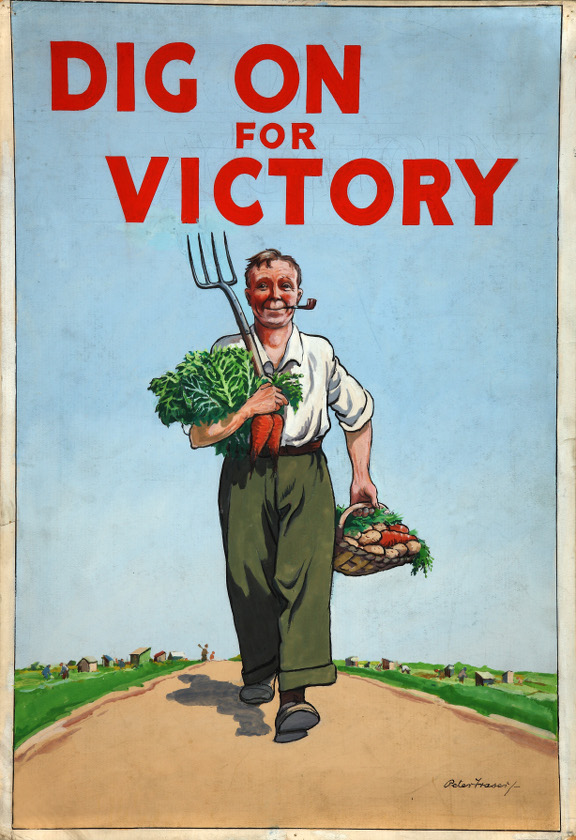
Them rutabagas ain't edumicatin' theirselves.
Them rutabagas ain’t edumicatin’ theirselves. Credit: Peter Fraser Dig on For Victory

Being Flexible

If there’s anything I’ve learned from undertaking projects, its time management is your friend and the project will almost always end up different than you expected. This is true from my experience composing music and programming software – by the end, you rarely recognize the final product in relation to the notes you started with. This is true of project based learning, too. Our initial outset for an iBook was intimidating – and its clear from our work-flow – the place we ended was different than expected.

I feel this is necessary – and its something I understand as a musician and educator. The idea you have at the beginning is rarely the idea you end up with. Being flexible is incredibly important. As an educator, you need to be able to step back and reconsider your lesson plans and workflow, often in the middle of a class. It takes a deep understanding of your subject matter and your students. You kinda have to be ready for everything.

We had the benefit of being teams. We weren’t an educator lost to make the changes on our own, but rather had the Super Cadre and some awesome instructors to help us achieve the best project possible.

Learnification

I feel there’s been varying opinions on what we really learned about Alaska and its rich history – but I have to say I feel I learned a lot. I doubt I’d pass a test, but I feel I really internalized much of what I researched deep in my being.

Honestly, another approach and I wouldn’t have been as interested – I was researching into the night until the last minute digging deeper into the story of the West Coast. Only sleep could conquer my insatiable desire to learn more. I read so many things I knew were impractical for our iBook intro or my lesson just because I was interested. I read things about other regions because I wanted to know more.

An assigned series of primary sources and readings would have been less interesting to me – I was initially afraid of the self guided research, but I found so much that intrigued me I ended up with far more than I could use in a practical way. Even if my research was limited by being an outsider, I feel my desire to provide an honest narrative of Alaska and its history helped me feel confident in my contribution.

Conflict and Beer

The conflicted nature of a project is it needs to be well defined at its outset, but also willing to eschew any of its standards along the way to succeed. I think this is what made our iBook stressful but successful (that would be a good motto for a personal trainer!). Just imagine how you would feel about our final product if we hadn’t had the last day where we edited with essential questions and balance in mind…

It feels scary if we didn’t have that amazing day – and there has to be time for students to reflect on their progress, too. If they just finish a big thing and have no chance for reflection, it makes the final product less impressive.

That means its time to step back, relax, and take advantage of finishing a project like an adult.

css.php