Culturally-Responsive Lesson Plan

Below you will find a PDF file of my lesson plan, Exploring Rhythm and Pulse in Inupiaq Dance Music:

Exploring Rhythm and Pulse in Inupiaq Dance Music

Below is a link to the PDF version of my lesson chapter from the Arctic section of the iBook:

Katie Kroko Inupiaq Music Lesson

Below are links to online resources and YouTube videos used in the lesson plan:

King Island & Little Diomede Dancers

on YouTube

Kivgiq 1988 Point Hope on

YouTube

1987 King Island Eskimo Dancers ­ Raven Dance on YouTube

Barrow Dancers; Loon Dance

on YouTube

Barrow Dancers; Whaling

Dance on YouTube

AFN 2013 Point Hope Dancers

d9 from YouTube

Alaska Native Dance at

Echospace artice on Education through Historical Organizations


Here is a list of the Alaska cultural standards for curriculum, which my lesson plan incorporates:

  • Cultural Standard A – a culturally-responsive curriculum reinforces the integrity of the cultural knowledge that students bring with them.
    • Section 1: a culturally-responsive curriculum recognizes that all knowledge is imbedded in a larger system of cultural beliefs, values and practices, each with its own integrity and interconnectedness
    • Section 2: a culturally-responsive curriculum insures that students acquire not only the surface knowledge of their culture, but are also well grounded in the deeper aspects of the associated beliefs and practices;
    • Section 3: a culturally-responsive curriculum incorporates contemporary adaptations along with the historical and traditional aspects of the local culture;
    • Section 4: a culturally-responsive curriculum respects and validates knowledge that has been derived from a variety of cultural traditions;
    • Section 5: a culturally-responsive curriculum provides opportunities for students to study all subjects starting from a base in the local knowledge system.
  • Cultural Standard C – a culturally-responsive curriculum uses the local language and cultural knowledge as a foundation for the rest of the curriculum.
    • Section 3: a culturally-responsive curriculum incorporates language and cultural immersion experiences wherever in-depth cultural understanding is necessary.
    • Section 4: a culturally-responsive curriculum views all community members as potential teachers and all events in the community as potential learning opportunities.
    • Section 5: a culturally-responsive curriculum treats local cultural knowledge as a means to acquire the conventional curriculum content as outlined in state standards, as well as an end in itself.
    • Section 7: a culturally-responsive curriculum is sensitive to traditional cultural protocol, including role of spirituality, as it relates to appropriate uses of local knowledge.
  • Cultural Standard D – a culturally-responsive curriculum fosters a complementary relationship across knowledge derived from diverse knowledge systems.
    • Section 1: a culturally-responsive curriculum draws parallels between knowledge derived from oral tradition and that derived from books.


I feel that my lesson plan embodies the aforementioned cultural standards because it embraces and enhances the knowledge that students bring with them to the classroom, it uses the local Inupiaq language and culture as a foundation for the lesson and the music curriculum, and it fosters a complementary relationship between western classical music learned in an ensemble setting and Inupiaq traditional music learned through oral transmission.  I think that my lesson on rhythm and pulse in Inupiaq music is most clearly linked to Cultural Standard C, specifically sections 3, 4, 5, and 7.  This lesson requires immersion in the Inupiaq language in order to learn the words to the songs in the lesson plan.  It also requires cultural immersion in order to learn the motions to the dances and their meanings.  This lesson treats members of the local community as teachers, and invites local Inupiaq Elders to the classroom to conduct the main portion of the music lesson.  Traditional music and dance are elements of local cultural knowledge, and learning and honoring traditional art forms is the main focus of this lesson.  In addition, learning traditional Inupiaq music and dance can help students to learn conventional music content standards by building skills such as inner pulse, rhythmic stability, and eurythmics.  In this lesson, all activities would take place under the guidance of or with the approval of the Elder leading the lesson, and all content would sensitively convey local cultural knowledge.  The role of the classroom music teacher is to enhance and build upon the cultural material presented by the Elder and to weave connections with western classical music concepts.

Multicultural Education Final Reflection

  1. How does understanding culture and power impact your teaching?

    It impacts my teaching because it affirms my beliefs that my role as a teacher is to provide opportunities for accessible learning. I think this attitude is important especially for the students living in the margins because they may have experienced a loss of culture and thereby a loss of power. Someone in class said that as a teacher, we should not say statements outwardly supporting trans students, because we might also offend those who are Christians. I am tired of hearing that my advocacy for the oppressed ought to be silenced for the fragility of those in power. Too long have we taught the history and culture of the privileged and we ought to strive towards understanding the cultures we do not see, or perhaps, we are blinded from seeing.I think we must understand culture for ourselves, so that in knowing ourselves, we can see how our lives are not always by choice, but by the influences that others have had on our lives, both personally and institutionally. I think understanding ourselves brings empowerment, and I hope that by providing a space for students to explore their own stories, they can come to be respectful not only of each other, but of themselves.
  2. Pick three terms that resonate with you from the Multicultural Education word wall. Define the terms and discuss why you chose these three terms.Tolerance vs Transformation.
    I really enjoyed this term that was put on the word wall, because I think it challenges people to critically examine their own use of vocabulary. Tolerance is a word that is often used in cases of cultural training/education (I mean, there is even a book called “teaching tolerance”), and its intentions may be benign, but its impact is not. Our differences should not be tolerated, but celebrated, and engaged in. Tolerance gives the option for those in power to disengage, a privilege which people in power always have had. Transformation on the other hand, provides opportunities for continuous learning and for Metanoia. Metanoia is a change of heart, and not just a developed skill-set to ignore differences. I think that recognizing the difference between Tolerance and Transformation is crucial in understanding ourselves and where our goal as teachers may lie.

    Revolutionary
    To be honest, in the past few weeks, I have struggled emotionally. The discussions that we have had were triggering, and some of the comments made were cringe-worthy for me. Everyday seems like a fight in various ways, to have to justify my experiences and to defend my understanding of racism as a person-of-color. That fight is not going to stop when I enter the school. I do not think Angie taught us with the expectation that our co-workers or our administrators will be on the same page about anti-racist education. That is why this word is so important, because in order for positive change to occur, to break through the school-to-prison pipeline, systems must be challenged. A revolution must take place, advocated by teachers, students, parents, community-members, lawmakers, etc… I grow more and more impatient everyday with systems that actively benefits some but disadvantages many, but I brew this frustration into a revolutionary movement that is working towards disrupting oppression in the education system.

    Hope
    The last word I chose was hope. Hope is a beautiful word for me, and a word that resonates with me. Through my anger and frustration and my trauma, I challenge myself to find healing, and my hopes have always kept me pushing forward. One of the hardest things to witness in classrooms is self-abuse, whether it manifest physically or emotionally. How do we as teachers help create a space in which a student may develop a sense of hope for their future? How can students bring themselves to hope for goodness, and not expect for results? I hope that my experiences as a student teacher will help me explore some of the answers that I am looking for.

  3. Describe your plan to teach in a culturally responsive way in the coming year. Include teaching strategies you might employ as well as content/units you will implement.Some concrete strategies for me include the following:
    1. Block the clock. Especially at Thunder Mountain where there is a class bell, and even if not, I think that our western perspective on time can be very detrimental to active learning. Discussions happen organically, and learning takes place at different speeds for every student. I think that if we compare ourselves and our work to a clock on the wall, it may result in lower self-esteem. I want to see if there may be a different strategy to approach time-keeping.

    2. Arrange the seats in a circle/U-shape. I mentioned in my post about BH&H that there may be a perceived hierarchy in a classroom where the teacher is the ultimate power and authority. When thinking about my experiences, most classrooms are shaped to exert such a power dynamic, with ordered seats facing the front, where a podium stands. I think that the more that we can become supporters of peer-led learning and communal engagement, the less there will be chances of students “falling through the cracks.”

    3. If I become a teacher, the first thing I want to do is disassemble everything (boards, posters, chairs, tables) and explain to the students on the first day of school that I want the classroom to be arranged in the way that we, as teacher and students, would find most engaging for our learning. Allowing students to have ownership over the space can provide for safety, empowerment, and mutual respect.

    4. Use of Elders. I think that it is crucial to allow Elders to share their experiences and see how they may have helped pave the road towards justice for future generations.


    Image Source:
    https://findingfreedomwithepilepsy.files.wordpress.com/2015/07/metanoia.jpg


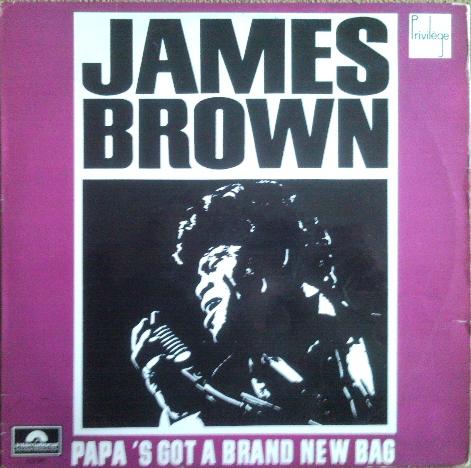
Papa’s Got a Brand-New Bag

I very much enjoyed this class and the approach that was taken. I did not know what to expect when I started the program and the class and I was happily surprised. I hope that all the other classes take this approach but I won’t hold my breath.

I learned by example and from doing. This makes everything more concrete and enjoyable. I will definitely employ project-based learning with as many lessons as I can. I think that it is a more powerful method than the memorize and regurgitate method. I am sold. Papa’s got a brand-new bag and new style of teaching. I think it’s going to be a hit and top the charts with the students.

Excellent!

Alaska Studies Final Reflection

What did you as a teacher learn about project-based learning?

Accountability. So often does this term, when used in the school setting, refer to punishment, blame, and guilt. My experience engaging in project-based learning with Peter Pappas taught me that accountability can be empowerment.

Peter and Angie communicated clearly at the beginning of our courses, that they wanted to do more than just preach, that they wanted to show and practice what it means to be culturally responsive teachers with the use of an iBooks publication, which is to be published for a public audience. When the structures were laid out and we as MAT students assigned ourselves, from that moment, the choice were ours to make.

With that came freedom, independence, determination, and accountability. As students, we were accountable for our own contributions to not only our own learning, but also the learning for our group. An open-ended topic with numerous approaches, we faced challenges ranging from group dynamics, personal advocacy, peer review, and celebration.

In my experiences working at an alternative high school in Juneau, students often express discomfort in being given a choice. Many students are victims of an abuse of power and control, and independence can be overwhelming; I know this, because as I was working through the project, I realized that my own upbringing was causing me to crash hard into the essence of project-based learning. When I attended elementary school in Korea, children suffered corporal punishment for getting an incorrect answer in a spelling test…we were eight years old. So much of my life has been about showing teacher-pleasing behaviors in attempts to fit into a square mold that my amorphous identity could not possibly do so.

I think looking back on these past three weeks, I want to research ways that I can help students feel safe in approaching decision-making. I am especially interested in working with high school students because for a lot of our teens, they are stuck between a hard place and a rock of expectations…they are “old enough” to know what is right and wrong, yet they are “too young” to make decisions for themselves. How do we teach students to become critical thinkers, if we cannot even empower them to be comfortable with their own strengths? Once we learn to recognize where we stand, only in relativity to our past experiences (and not in competition with one another) can education become a personal victory, and not a chore to be checked off for our parents, teachers, and the judges of this world.


Image Source: http://www.fierceinc.com/wp-content/uploads/2013/02/02.06.13Blog.jpg


Reflections on Multicultural Education

1. How does understanding culture and power impact your teaching?

I think one of my main concerns as a teacher will be to make sure that my students are conscious of some of the dynamics of culture and power that we’ve been talking about over the past three weeks, and that they feel safe discussing them in class. I think one of the greatest opportunities of discussion-based classes is the ability to encourage students to ask critical questions about the messages they are receiving from the world around them. As a language arts teacher, I hope that my students will be able to make their own judgments about the dynamics of culture and power in the works we read for my class.

2. I chose three words from the word wall that I’m still working on or trying to figure out.

Place-Based Education: This is something that I believe very strongly in, and I’ve tried to give my students place-based projects in the past, but I’ve always found it a little bit difficult because I move around a lot and I’m rarely in a place that I know a lot about. My cousin Sally, who also teaches in Fairbanks, and who grew up there, is brilliant at coming up with place-based projects. In her first week as a TA, she took her class on a field trip to the reuse section of the dump, and that’s now a standard field trip for composition classes, because it turns out you can learn a lot about Fairbanks by careful observation of the dump’s reuse pavilion. My favorite lesson of Sally’s is on citations – students can plan a trip anywhere in Alaska, using an unlimited imaginary budget, but they need to research it thoroughly, write it up, and cite everything. I’ve stolen many of Sally’s assignments, but I’ve never quite been able to imitate her creative flair for place-based education. This class has given me a good sense of the variety of place-based projects that are possible, though, and I hope I’ll eventually be able to stop stealing assignments from Sally.

Safe Space: This is a tricky one for me, and the reason why it’s tricky came up during our class discussion about David Katzeek and trans issues. That discussion highlighted a complicated question: how do you balance different kinds of safety? How do you make sure a space is safe for every marginalized group, for instance trans students, while also making sure it is safe for open and thoughtful discussion? If an authority figure makes a remark, as David Katzeek did, that comes across as transphobic, how does the teacher deal with that so as to keep the space of the classroom as safe as possible for as many people as possible? This is something I’m still trying to figure out.

Eurocentrism: I chose this word because the reality is that my own tastes in literature are pretty Eurocentric. I was raised in a family that reads a lot of Victorian novels and turn-of-the-century children’s literature, and that’s still a big part of what I read for fun. Since I started teaching, I’ve made an effort to make my reading more multicultural, but I know I still have a long way to go.

3. My plan for the year – well, it’s hard to say, because my conversations with my host teacher have been quite brief so far, so I don’t know how thoroughly she has the year planned out. In the future, I will certainly aim for a lot of diversity in the authors and the readings I assign my students. I think it’s important to represent writers of many different cultures, and to make it clear that they are on the reading list because they are good writers that the students can learn from. I also hope to assign my students a lot of writing by Alaskan writers – Alaska Native writers, whenever possible. I’ll be at Mt. Edgecumbe, working with students from all over Alaska, so one challenge – assuming I get any say in the reading material – will be finding enough material from different parts of Alaska that all of my students feel represented. I will also, hopefully, be able to use oral histories from all over Alaska, which will allow my students to do some place-based investigation of an area they are from or have a connection to.

“Teachers: Most Important People in the World”

  1. “How does understanding culture and power impact your teaching?”

I think that culture and power can be different but similar and can impact my teaching also in similar but different ways. Culture can be very powerful to an individual or a group and can provide one with much power to move forward or to stay upright on their feet. Power can also be the force that takes away culture from individuals for reasons that are intentional and hurtful or for reasons that are unintentional but still hurtful.

As teachers, we have the power to empower students with the ability to embrace their culture and to help them learn and understand other cultures. By using this power as a teacher for good, I think it will create power within the student, class, and community and create a new culture of understanding and compassion.

Power can be used for good and bad reasons and there is not enough power being used for good. I hope to build a culture in my classroom that embraces other cultures which will create a powerful wave that carries others that may be stranded, to shore.

2. Pick three terms that resonate with you from the Multicultural Education word wall. Define the terms and discuss why you chose these three terms.

Determination: To break through the barriers and deterrents to achieve a goal or a desired outcome. – I believe that all teachers must have determination in order to strive for 110 percent within themselves and in their students.

Influence: To change the outcome or pathway of something or someone. – Mr. Fred Rogers said that “The most important people in a child’s life are that child’s parents and teachers. That means parents and teachers are the most important people in the world.” Teachers and parents have a huge influence on a child for the rest of their lives! The direction that students are pointed at an early age will shape their journey in a big way.

Uncomfortable: To feel out of place, or uneasy. To be unsettled or bothered. – I believe that teachers must put themselves in an uncomfortable situation for the benefit of the students. There are times that a teacher may feel comfortable with a situation in regards to a sensitive topic dealing with race, culture, gender or other topics. When the teacher is comfortable, there may be a student that is falling between the cracks. There may be a student that is not heard or understood. As a teacher, we must be uncomfortable on put ourselves in front of the firing squad. After all, a teacher is one of the most important people in the world.

3. In the coming year and years, I plan on looking at my class as a color wheel. With the primary colors, one can create any color of the rainbow and can find its compliment or balance color(s). Understanding that there are students or all colors and backgrounds, I will try to bring together resources from the class, school, and community that will help us mix and add the colors that we have to create new colors that we may never have known existed. I will try my best to include a wide range of experiences, exercises, and lessons that bring in more than I know. I know that I do not know everything and we all need help to see the full rainbow of cultures and knowledge. I will also show to students that asking questions and being humble is a valuable method to understanding the unknown. To know and understand your neighbor is to first step to understanding the world.

I will try my best to include a wide range of experiences, exercises, and lessons that bring in more than I know. I know that I do not know everything and we all need help to see the full rainbow of cultures and knowledge. I will also show to students that asking questions and being humble is a valuable method to understanding the unknown. To know and understand your neighbor is to first step to understanding the world. To understand the world, one must understand oneself. To understand oneself, one must look to others.

Project-Based Learning Reflection

My experience in Alaska Studies class was an overwhelmingly positive one because of the learning format.  As soon-to-be student teachers, we got to learn from the perspective of the student, a technique which I found to be invaluable.  As teachers, we were immersed in the experience of the learner, an experience which can either be engaging and empowering or dry and force-fed depending on the presentation.  I liked that ALST 600 was a course which was in direct opposition to the style in which I learned as a 1990s and early 2000s public school student.  We turned the traditional classroom model on its head by becoming our own teachers through the project-based learning model.

I think that project-based learning has provided me with a window into the perception, processing, and experience of the learner that I was not able to directly experience as a student in the primary and secondary grades.  I did have the opportunity, however, to experience lots of self-guided learning with my viola professor in college, so this has greatly influenced my desire to make the learning process more adaptive and engaging for my own students.  Experiencing project-based learning has allowed me to expand my own teaching toolbox and add more tools that challenge the student to empower him or herself and seek out knowledge on his or her own.  I love how project-based learning puts the impetus for learning in the hands of the student, in contrast to the authoritarian teacher-driven methods of old.  I personally believe that this is one of the ways that we as teachers can improve retention and increase engagement with our students.  Research is no longer a drudging task, but an opportunity for exploration, discovery, and creativity for the student.  This is groundbreaking when we consider the historical “sink or swim” memorization expectations for students in the not so distant past.  Without project-based learning and other methods of innovative student engagement, students are less likely to create meaningful connections about the information they are exposed to in school.  Students are less likely to learn the critical thinking skills needed to question the social structures and power dynamics of the status quo.  Without those critical thinking skills, a student can easily become another cog in the wheel of the machine.  Project-based learning is a way to teach students independence and self-empowerment.  Project-based learning lets students know that the ability to learn is inside them, just like David Katzeek said when he visited our class.

Writing a textbook on Alaska as a class was an enlightening and eye-opening experience for me, and it revealed many opportunities for personal and group growth that would be valuable to students in any classroom.  The project not only taught the subject, Alaska history, but it taught the skills needed for learning – the building blocks of the learning process.  We researched Alaskan history, but we also actively used our skills of teamwork, collaboration, cooperation, critical thinking, analysis, and synthesis.  Many of the skills that the iBook project fostered are in alignment with the skills and values I strive to teach my students in El Sistema-inspired music programs.

Through writing the iBook, I learned the value of giving students projects and assignments that challenge them to think critically and be global citizens.  Our project was proof that students both strive to achieve greater heights academically and are able to internalize knowledge more successfully when challenged to think critically and demonstrate their knowledge in a creative format.

Some of the most amazing aspects of this project were the personal, interpersonal, and community-minded transformations that it fostered.  Writing individual lesson plans for the iBook spurred many of us to develop deeper connections to the material we were studying and writing about.  Working as collaborative teams on our regional chapters pushed us to come together and make sure that we were accurately and sensitively conveying the history of the region we were assigned.  This required much humility, and it challenged us to hone our listening skills and our ability to compromise.  As we compiled and edited our chapters, we used our critical thinking skills to determine which information we wanted to include in our chapter and how we wanted to present it.  Communication skills were crucial for our groups to navigate this process and make sure that everyone’s voice was heard in the final product and to make sure that everyone’s contributions were woven together with a unified voice.  We used our critical thinking skills to determine which sources would prove most useful for our project, discerning to discover which sources provided us with unbiased, up to date, and accurate information.  One of the most transformative parts of the process was the final editing and reviewing phase.  I felt that this part of the process allowed us to deeply analyze our work, confront our own personal biases, and hold our product under a critical lens to determine if we had presented Alaskan history in a balanced and culturally sensitive way.  By the end of the process, I felt like we as a class had learned more about how to be culturally responsive teachers and citizens through a process of researching, making, doing, internalizing, and analyzing.  After working on our iBook project, I feel that project-based learning is an incredible way to teach students life skills through a process of exploration and experiential learning.

css.php